
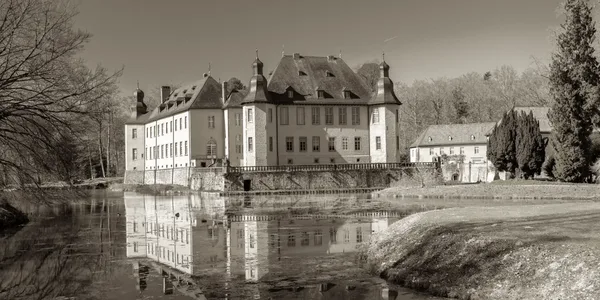
Candlelight falls across a Gothic vault while a technician adjusts a truss in the half-dark — without a single drill ever touching the wall. No holes in the masonry, no scratches on the stone, and yet: full sound, precise lighting, a stage design that doesn't cover the architecture but actually brings it out. That's the art of bringing professional event technology into historic buildings.
Old walls, new possibilities
Churches, castles, fortresses, and old industrial halls take on an impact with the right technology that no modern new-build can match. Of course, spaces like these come with their own particular demands — but that's exactly what makes them so appealing to us. The special character of a historic venue comes from the interplay between centuries-old architecture and technology that's integrated so it stays invisible. For us, these are among the projects we enjoy most: every building tells its own story, and it's that atmosphere we want to bring out rather than cover up.
Look before you drill: the site assessment
Before a single cable goes down, every listed or protected venue starts with a thorough site assessment. Questions we clarify upfront with the client and the venue include:
- Are there already approved rigging points for trusses and equipment?
- What's the structural condition of the ceiling — historic stucco, exposed beams, or sensitive wall paintings?
- What requirements does the local heritage protection authority impose?
- Are there fire safety restrictions, for example on haze machines or set materials?
- Which floor and wall surfaces need special protection?
These questions determine which technical solutions are even on the table — and this is exactly where you can tell whether a provider has real experience with projects like these.
Rigging without regrets: building without drilling
Where approved rigging points already exist, truss systems and equipment can usually be flown without issue. Where they don't, we develop alternatives: free-standing structures, ground-support systems, or particularly careful builds that leave the building fabric completely untouched. Professional event technology in historic buildings stands out above all for adapting to the architecture — not the other way around. Experience, a careful touch, and very thorough planning are essential here.
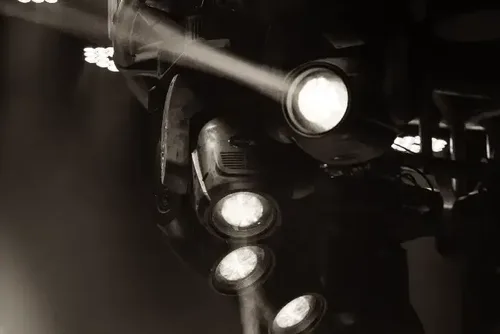
In churches and castles especially, free-standing truss towers, load-spreading floor plates, or specially engineered rigging solutions are common — none of them requiring any connection to the historic structure. That means even spaces with no modern infrastructure can still host full-scale stage, lighting, and sound technology.
When the church becomes a concert hall: acoustics in historic spaces
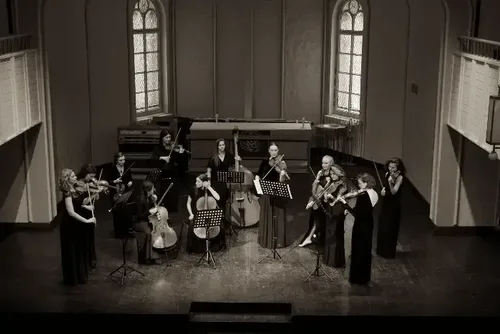
Historic buildings like churches or large stone halls often have their own, very long reverberation time. What sounds beautiful coming from an organ quickly becomes a challenge for a speech or a concert. That's why thoughtful sound design is essential in venues like these: targeted speaker placement, delay lines, and careful level balancing keep speech intelligible and let music land with full impact despite the room's acoustics, without turning muddy.
Modern venue vs. historic building: what actually differs
At first glance the requirements look similar — but the details are a different story altogether. Here's a comparison for orientation:
Rigging points
- Modern venue: usually in place and up to standard
- Historic building: often absent, need to be substituted
Floor load
- Modern venue: standardized, well documented
- Historic building: needs individual assessment, sometimes sensitive
Tape & fixings
- Modern venue: generally unproblematic
- Historic building: often only special, residue-free materials allowed
Acoustics
- Modern venue: mostly dampened, predictable
- Historic building: long reverberation times, complex sound design needed
Permits
- Modern venue: standard process with the venue
- Historic building: additional coordination with the heritage authority
Cable routing
- Modern venue: cable channels already in place
- Historic building: special protection needed, no fixed installation
Lead time
- Modern venue: can be planned short-notice
- Historic building: longer lead time recommended for coordination
Want to stay in the loop?
Subscribe to our newsletter.
Teamwork with the sexton, castle administrator, and heritage office
An often underestimated part of these projects is close coordination with the people responsible on site. Sextons, castle administrators, or heritage conservation officers often know their building down to the last detail and know exactly which spots are especially sensitive. This kind of collaboration on equal footing isn't a tedious extra step — it's the key to everyone walking away satisfied: the client with the result, the venue with how carefully it was treated. If you're planning a project in a historic venue, we support you with our services, from the first site assessment through to execution.
Curtain up: concerts in churches, galas in castles
That's why concerts in churches, gala evenings in castles, and events in historic industrial halls or listed buildings have been going strong for years. What looks like a limitation at first glance becomes a stage for extraordinary moments with the right partner. Whether it's a festive company anniversary in a knight's hall, a classical concert in a church nave, or a gala dinner in an old factory hall — the combination of history and modern technology creates an atmosphere no standard event venue can replicate.
Conclusion
Old walls and modern technology aren't at odds — they complement each other. For us, historic buildings aren't problems, they're projects with character. And that's exactly where the events happen that guests still remember years later.
FAQ
In most cases, yes. Beyond coordinating with the venue itself, additional approval from the relevant heritage authority is often required — especially when trusses, rigging points, or larger structures are planned. We plan the technical setup so it's compatible with the requirements in place, and coordinate closely with everyone involved.
Where approved rigging points are missing, we use free-standing structures such as truss towers or ground-support systems with load-spreading floor plates. These solutions require no connection to the historic structure at all, and still allow for full-scale stage, lighting, and sound technology.
Historic buildings like churches or large stone halls often have long reverberation times that can quickly make speech hard to understand. With targeted speaker placement, delay lines, and careful level balancing, we make sure speech stays intelligible and music lands with full impact despite the room's acoustics.